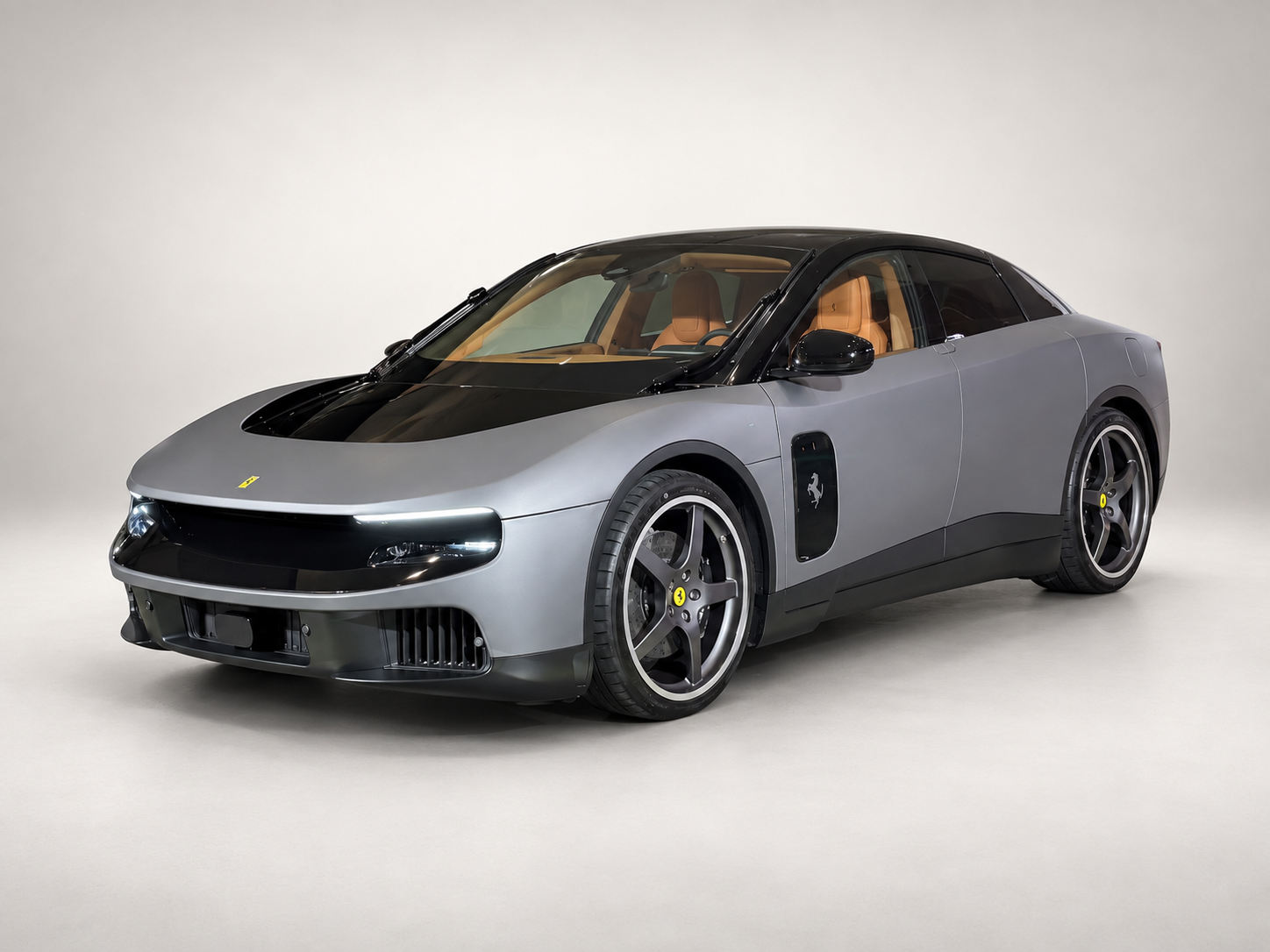
Ferrari Luce: Designed to Be Different
Unveiling the Ferrari Luce at the Stedelijk Museum Amsterdam
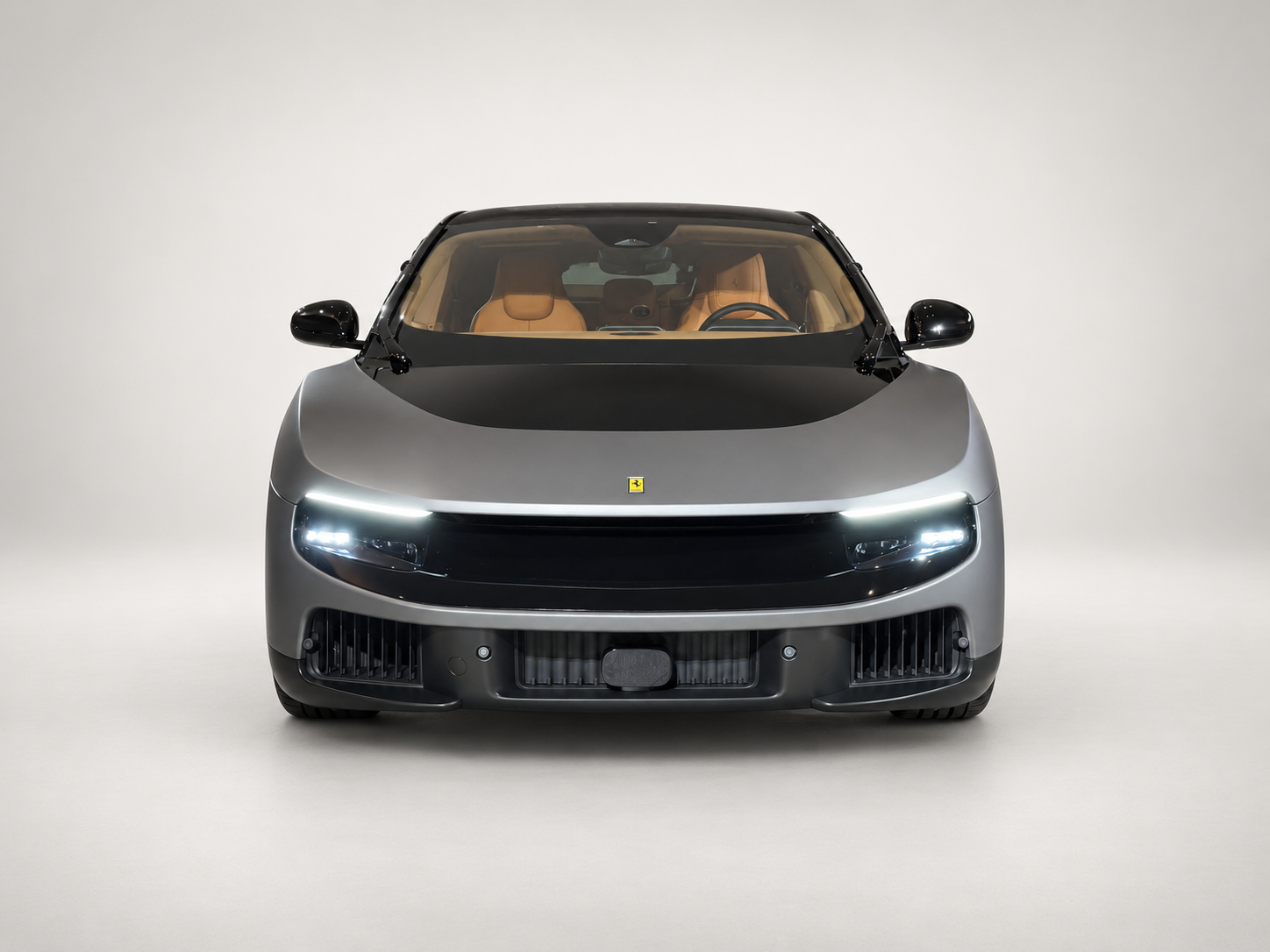
At the Stedelijk Museum in Amsterdam, a presentation of the Ferrari Luce began with a revealing observation: much of the conversation around Ferrari’s new car has centred on its design, rather than its electric powertrain. The Luce is Ferrari’s first fully electric model, with four doors and five seats, but its significance lies as much in the thinking behind its shape as in what powers it.
The starting point is a quality described as *confident humility*. Ferrari is confident enough to make a bold departure, yet willing to look outside Maranello for a fresh point of view. It has done so before, working with celebrated names such as Pininfarina, Zagato and Scaglietti. This time, it invited LoveFrom, the design collective founded by Jony Ive with Marc Newson, to help imagine a Ferrari unconstrained by familiar automotive conventions.
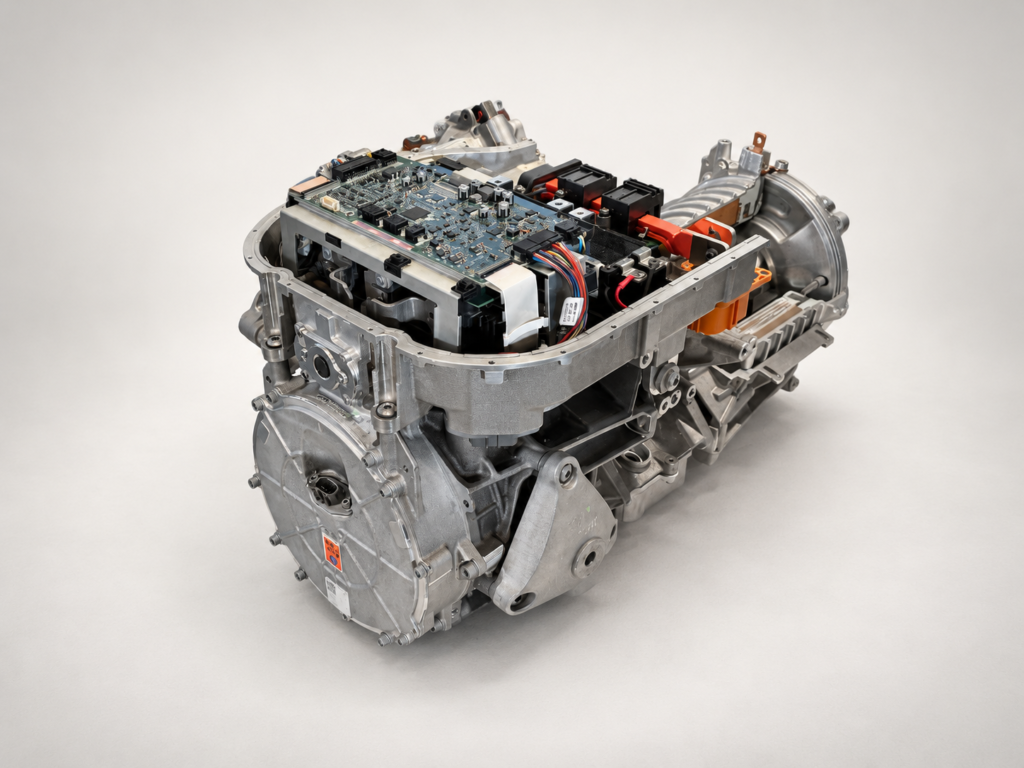
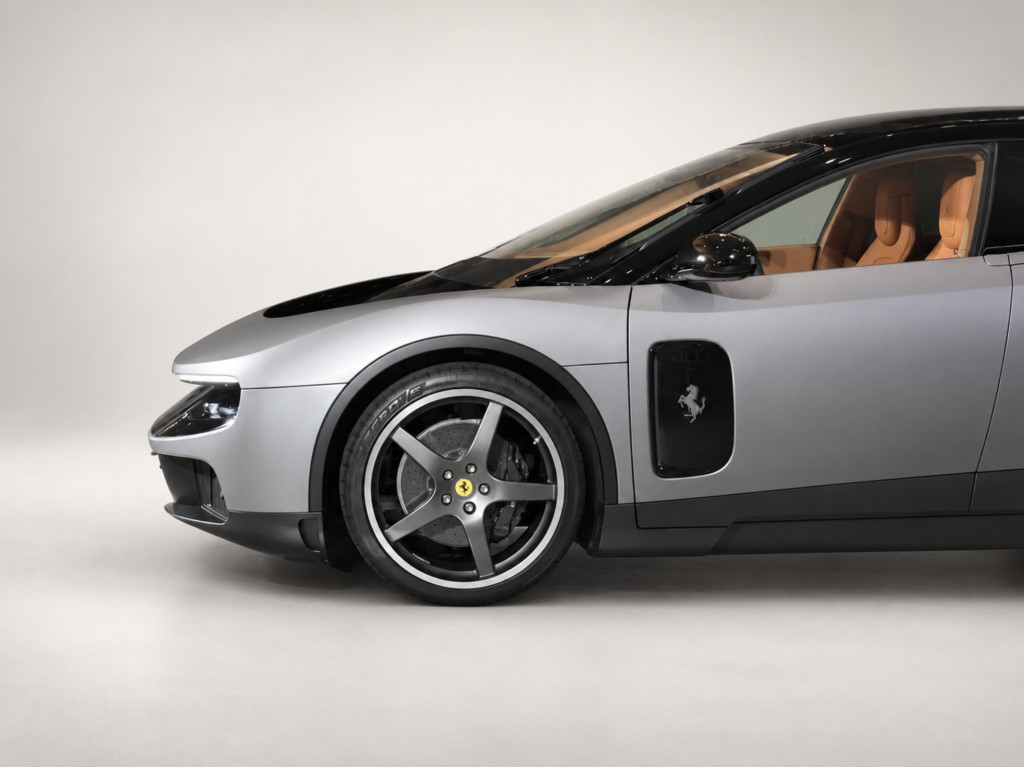
The resulting car is guided by two ideas: simplicity and inevitability. In design, inevitability is the sense that an object could scarcely have taken another form because every line answers a purpose. With the Luce, the electric platform changes the usual starting point. No combustion engine or conventional transmission has to dictate the cabin’s proportions. That freedom creates room for five occupants and generous luggage space while allowing the exterior to retain a clear, unified shape.
The upper body was described in Amsterdam as a teardrop, its glasshouse enclosing the passenger compartment in one simple volume. A contrasting outer structure adds definition and helps direct airflow around the car. The relationship between those two forms gives the Luce its distinctive appearance: spaciousness and aerodynamics expressed together, rather than treated as separate problems.
There is serious performance beneath the clean silhouette. Ferrari quotes 1,050 cv from four electric motors, a 0–100 km/h time of 2.5 seconds and a top speed of 310 km/h. The five-seat layout makes those figures particularly striking. Luce asks whether a Ferrari can offer markedly more everyday space while preserving the immediacy associated with the badge.
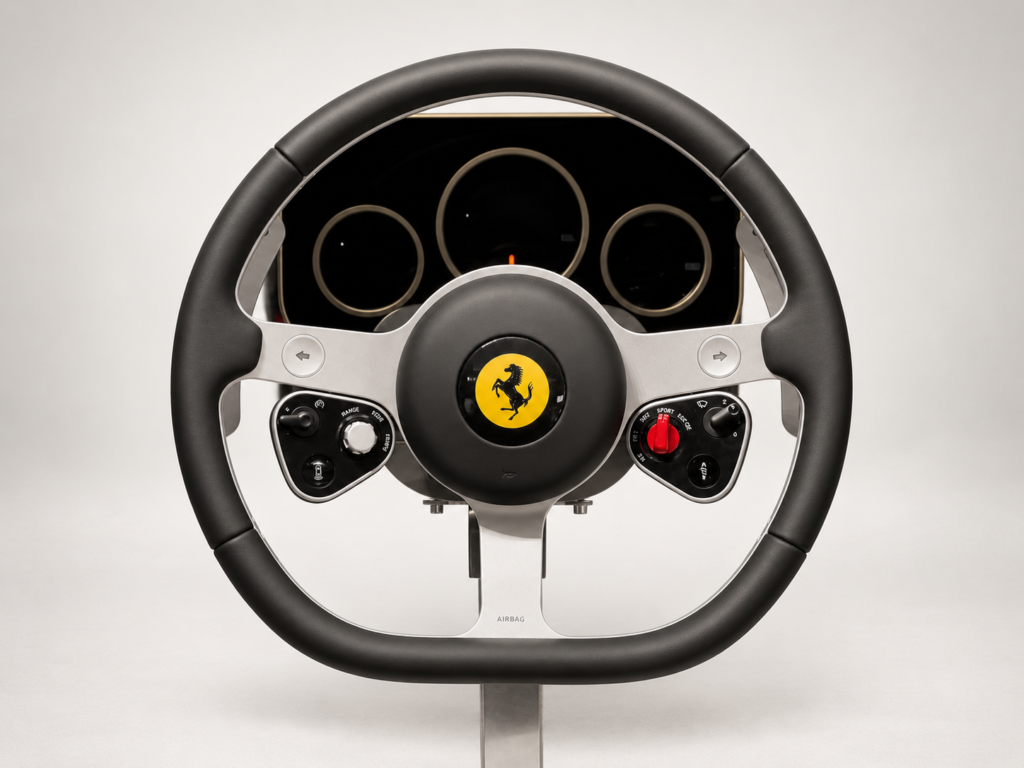
Inside, the design argument becomes tactile. Machined aluminium, glass and leather form an environment in which the feel of each switch, selector and ventilation control has been considered. The click of a button and the movement of a dial matter because they shape how a driver experiences the car. The aim is to make advanced technology feel natural rather than intrusive.
The presentation did not demand universal approval of the Luce’s looks. Instead, it made a case for understanding the choices before judging them. Electric architecture opened new possibilities; an outside design perspective helped Ferrari explore them. The result is a car that looks forward with conviction, and a design intended to make sense on its own terms.